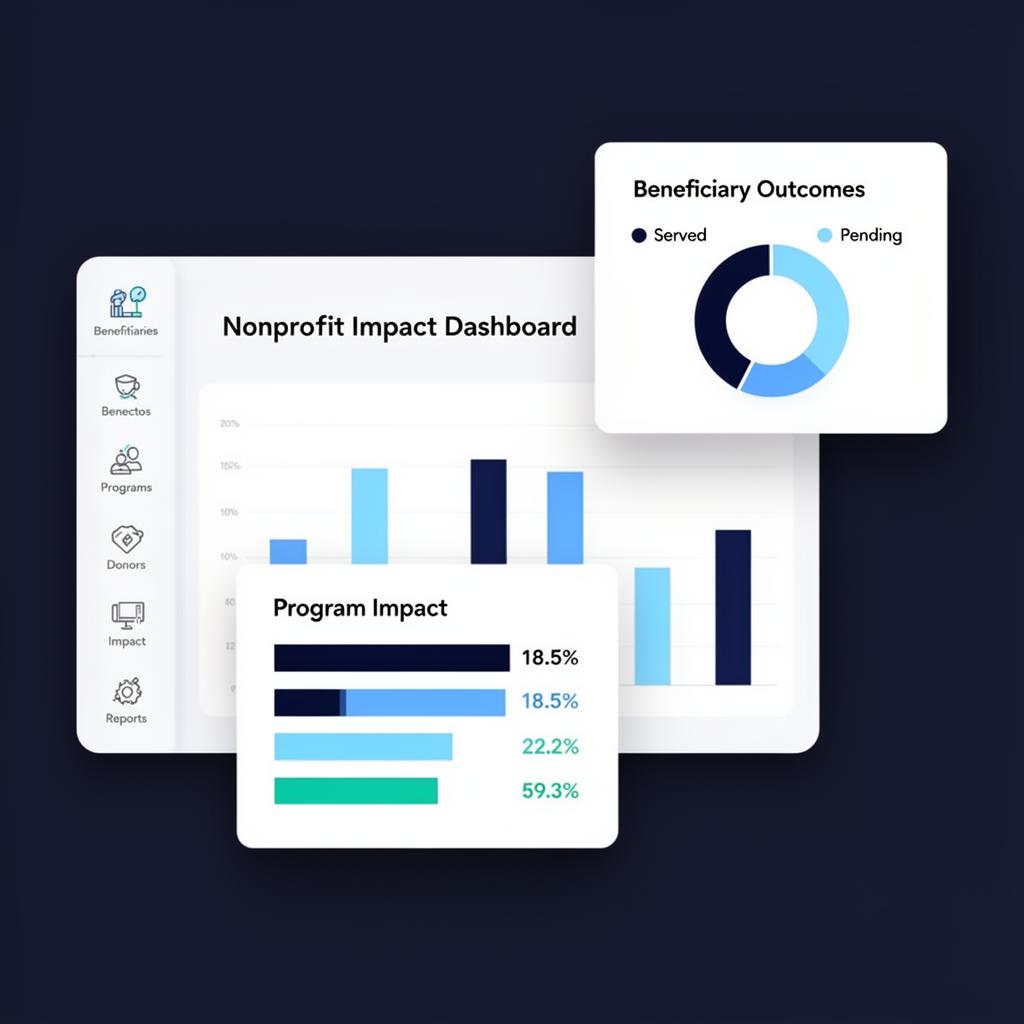
Replace fragmented case management with one connected system.
PDP (participant development platform) helps nonprofits coordinate participant support, communication, workflows, documentation, development, and reporting in one connected platform — making it easier for teams to stay aligned, support more people, and reduce administrative burden.
- Coordinated participant support
- Shared team visibility
- Communication and workflow tracking
- Documentation and reporting
- Early risk identification
- Reduced administrative burden
Most nonprofits are forced to operate across too many disconnected systems.
The work is mission-driven. The infrastructure usually isn't. Teams end up holding everything together with spreadsheets, side channels, and end-of-month reporting sprints — and the people who pay the price are the participants and the staff.
Spreadsheets everywhere
Participant info, intake notes, services, follow-ups — scattered across files, tabs, and folders that nobody fully owns.
Disconnected communication
Conversations live across email, text, paper notes, and side channels — so context gets lost between handoffs.
Scattered participant records
Different programs hold different pieces of the same person's story, and no one has the full picture.
Difficult follow-through
Good plans stall because there's no shared way to see what's in motion, what's stuck, and what needs a nudge.
Duplicated work
Staff re-enter the same information, repeat the same intake questions, and recreate the same reports across systems.
Manual reporting
Funder updates, board reports, and outcome summaries get rebuilt from scratch every cycle — pulling staff away from participants.
Siloed programs and teams
Programs that should be coordinated end up operating side by side instead of together — even when they're supporting the same people.
Inconsistent visibility
Leaders see different pictures depending on who they ask, what spreadsheet they open, or which week they look.
Staff burnout from administrative load
The people who came to do mission work spend too much of their time managing systems instead of supporting people.
Participants falling through the cracks
Without shared visibility and steady follow-through, the people who need the most support are often the easiest to lose.
Coordinated participant support and operational visibility in one system.
PDP helps nonprofits coordinate participant support, communication, workflows, documentation, and outcomes across programs and teams — so the organization spends less time managing disconnected processes and more time helping people succeed.
Coordinated participant support
Everyone supporting a participant works from the same picture — not from different versions of the same story.
Shared team visibility
Case managers, program staff, and leadership all see what's happening across participants and programs.
Structured workflows and follow-through
Plans, next steps, and check-ins stay visible until they're done — not lost between conversations.
Reduced administrative burden
Less duplicate entry, less spreadsheet maintenance, less rebuilding reports from scratch every cycle.
Easier documentation and reporting
Notes, milestones, and outcomes flow out of the daily work — instead of being a separate end-of-month sprint.
Programwide visibility
Leadership sees how programs are operating in one place — across sites, services, and teams.
Earlier identification of participant needs
Stalled progress, disengagement, and support gaps become visible early enough to actually do something about them.
Stronger communication and coordination
Internal coordination and participant communication tied to the work — not scattered across personal channels.
Better participant outcomes
More follow-through, more steady support, more people reaching the next step in their journey.
Not just another case management or reporting tool.
Traditional systems store participant information, track services, collect forms, and generate reports. PDP works alongside those systems to coordinate support, identify participant needs earlier, improve communication, guide participant development, and connect workflows across teams — so services, goals, and outcomes actually line up.
Traditional systems
- Static participant records
- Disconnected communication
- Manual coordination
- Reactive support
- Reporting-heavy workflows
- Limited cross-program visibility
PDP
- Coordinated participant support
- Shared visibility
- Structured workflows
- Earlier intervention opportunities
- Continuous follow-through
- Connected development and outcomes
Complementary to the case management, intake, and reporting systems you already use — not a replacement.
Coordinated support that helps people keep moving forward.
Participants get structured support, steady communication, clear next steps, coordinated services, milestone visibility, and development that meets them where they are — across employability, life skills, workforce readiness, stability, and confidence.
Employability
Practical workplace readiness — communication, professionalism, organization, and follow-through participants can use right away.
Life skills
Everyday skills that build stability and confidence, supported in the flow of the work participants are already doing.
Workforce readiness
Structured preparation for the kind of work environments participants are actually entering.
Stability
Steady support across the full participant journey — not just at intake or at the end.
Confidence
Progress made visible, so participants can see how far they've come — not just what's still ahead.
Participation
Easier ways for participants to stay engaged with their plan, their goals, and the people supporting them.
Follow-through
Clearer next steps and steady check-ins so plans actually move from conversation to completion.
Goal progression
Milestones that meet participants where they are and help them keep moving forward.
How the work actually changes.
Same mission, same people, same programs — with more structure, more visibility, and far less time spent holding everything together with spreadsheets and side conversations.
Program Director
- Multiple disconnected systems to stitch together
- Difficult reporting across programs and sites
- Limited visibility into what's actually happening day to day
- Reactive management driven by whatever surfaces first
- Manual coordination between staff, programs, and partners
- One connected operational view across the organization
- Easier reporting tied to real participant work
- Better team coordination across programs
- Clearer visibility into participant progress and outcomes
- More time focused on mission impact, not system wrangling
Case Manager / Support Staff
- Scattered communication across channels
- Difficult follow-through between check-ins
- Manual documentation that piles up at the end of the week
- Participants slipping through the gaps between programs
- Constant context-switching between spreadsheets and notes
- Shared participant visibility across the team
- Easier coordination between staff and programs
- Better follow-through on plans and next steps
- Earlier support opportunities for participants who need it most
- Less administrative burden, more time with people
Participant
- Unclear next steps and shifting expectations
- Inconsistent communication across staff and programs
- Difficulty staying engaged between appointments
- Feeling disconnected from the people supporting them
- A clearer support path with visible next steps
- Steadier, more reliable communication
- Structured guidance through goals and milestones
- More confidence and steady progress over time
Executive Leadership
- Limited visibility across programs and sites
- Difficult outcome tracking and impact reporting
- Reporting cycles that pull staff away from participants
- Hard to see what's working and what needs attention
- Programwide visibility in one place
- Better operational coordination across teams
- Easier outcome visibility for funders, boards, and partners
- Stronger organizational alignment around what matters
Identify needs before people fall through the cracks.
PDP surfaces the engagement, progress, and support signals that matter — so teams can step in earlier, with the right kind of support, instead of finding out after a participant has already disengaged.
- Drop-off in participation
- Missed check-ins and appointments
- Long gaps between touchpoints
- Low follow-through on agreed next steps
- Stalled goals or milestones
- Inconsistent participation in services
- Workforce or life-skill readiness gaps
- Communication breakdowns with staff
- Quiet participants going under the radar
- Participants juggling too many programs at once
- Signs of instability surfacing in notes
- People at risk of falling through the cracks
Support, not surveillance
This isn't about monitoring participants. It's about giving staff enough visibility to step in earlier with real support — so fewer people quietly disengage and more people reach the next step in their journey.
Real capabilities for how nonprofit teams actually work.
Designed around the way case managers, program staff, directors, and leadership actually do the work — across participants, programs, and partners.
Participant communication workflows
Steady, organized communication between staff and participants, tied to the work — not scattered across personal channels.
Why it matters: Participants stay supported between appointments — not just during them.
Shared team visibility
A connected view of participants, services, and progress across staff, programs, and sites.
Why it matters: Everyone supporting a participant works from the same picture, instead of pieces of it.
Documentation and notes
Case notes, intake info, and updates captured in the flow of the work.
Why it matters: Less end-of-week paperwork. More accurate, useful documentation.
Progress and milestone tracking
Clear milestones that show where each participant has been and what's next.
Why it matters: Progress becomes visible and motivating — for staff and for participants.
Programwide visibility
Cross-program views of participants, services, and outcomes.
Why it matters: Leadership sees how the whole organization is operating, not just one slice.
Workflow automation
Routine steps, reminders, and handoffs handled automatically.
Why it matters: Staff focus on people instead of process maintenance.
Follow-through tracking
See what was started, what's in motion, and what's been completed.
Why it matters: Plans stay visible until they're done — not lost between conversations.
Service coordination
Coordinated service delivery across programs, partners, and teams.
Why it matters: Participants get a connected experience instead of a patchwork of touchpoints.
Employability and life skill tracking
Structured progress across workforce readiness, life skills, and development goals.
Why it matters: Outcomes that matter, captured as part of the daily work.
Reporting and compliance support
Reporting tied to real participant activity, ready when funders, boards, or auditors ask.
Why it matters: Less manual reporting work. Less last-minute scrambling.
Risk alerts and visibility
Earlier signals when engagement, progress, or support needs change.
Why it matters: Teams can step in before small issues become big setbacks.
Multi-program coordination
Shared workflows and visibility across programs that serve overlapping participants.
Why it matters: Programs operate together — not just side by side.
Spend less time managing systems. More time supporting people.
PDP takes the operational weight off staff who came to do mission work — replacing spreadsheet sprawl and disconnected tools with coordinated workflows and shared visibility.
Without PDP
- Spreadsheet sprawl across programs
- Disconnected systems and side tools
- Scattered communication channels
- Reactive support when issues surface late
- Manual reporting cycles every month
- Difficult coordination across teams and partners
With PDP
- Centralized participant workflows
- Coordinated communication across staff
- Shared visibility across programs
- Easier reporting straight from the work
- Stronger follow-through across the team
- More time focused on participant success
Reporting and documentation built into the daily workflow.
Participant progress, communication history, support notes, milestones, and program activity flow out of the work itself — so program, grant, and funder reporting is ready when you need it, not built from scratch every cycle.
- Participant progress tracking tied to real work
- Complete communication and service history
- Documentation captured as work happens
- Milestone visibility across participants and programs
- Program reporting without rebuilding it from scratch
- Grant and funder reporting ready when you need it
- Audit readiness as a byproduct of the daily workflow
- Less manual reporting work for already-stretched staff
Less administrative burden — not another compliance system to maintain.
What nonprofits can expect.
Not another database. Not another dashboard. A coordinated participant support and operational system that helps nonprofits support more people, with less fragmentation and less administrative burden.
- Stronger, more coordinated participant support
- Improved coordination across staff, programs, and partners
- Earlier intervention when participants start to struggle
- Better communication between staff and participants
- Reduced administrative burden across the organization
- Stronger follow-through on plans and next steps
- Clearer program visibility for leadership and boards
- Improved participant engagement and retention
- Better workforce and life readiness outcomes
- Fewer people falling through the cracks
see our software in action
See how PDP helps nonprofits coordinate support, reduce administrative burden, improve communication, and help more people succeed through one connected system.