Scalable employability development across your region.
CDP (career development platform) helps workforce organizations coordinate participant development, communication, workflows, employability support, and outcome visibility in one connected system — reducing staff burden and improving workforce readiness outcomes.
- Structured employability development
- Workplace readiness support
- Guided participant growth
- Reduced case manager burden
- Earlier identification of support needs
- Workforce readiness visibility
Most workforce organizations can't scale individualized support effectively.
Caseloads keep growing. Staff capacity doesn't. And the people working hardest to support participants spend more of their time managing systems than supporting people.
Case managers carry overwhelming caseloads
There's only so much one person can do well — and most case managers are stretched far past that line every week.
Employability development is inconsistent
Some participants get strong, structured preparation. Others get whatever fits into the next appointment.
Individualized support is hard to scale
Participants need different kinds of guidance at different moments, and there's rarely enough time to give each one what they actually need.
Communication and follow-through are fragmented
Updates live across calls, emails, paper notes, and side channels — so plans stall between conversations.
Readiness gaps appear too late
By the time a workplace readiness issue surfaces in a placement or training, the easiest window to support the participant has already closed.
Reporting consumes too much time
A meaningful share of staff time disappears into reporting cycles — pulling people away from the participants they're trying to support.
Staff spend more time managing systems than supporting people
Spreadsheets, intake tools, reporting systems, partner portals — most teams are stitching it all together by hand.
Guidance between meetings is limited
Participants make the most progress with steady support, but most programs have no structured way to support people between case manager touchpoints.
Outcomes vary widely across the region
Different sites, providers, and partners deliver very different participant experiences — with no shared operational picture.
Scalable employability development and coordinated workforce support.
CDP helps workforce organizations coordinate participant development, communication, workflows, employability support, and outcome visibility in one connected system — reducing staff burden and improving workforce readiness outcomes.
Structured employability development
Guided progression across the communication, professionalism, and workplace habits participants actually need on the job.
Workplace readiness support
Real-world preparation for the kinds of roles and environments participants are entering — not generic content.
Guided participant growth
Participants can keep moving forward between appointments — independently, or with coach and partner support.
Reduced case manager burden
Less repetitive coaching for the basics. Less manual follow-up. More staff time on the moments that really matter.
Workforce readiness visibility
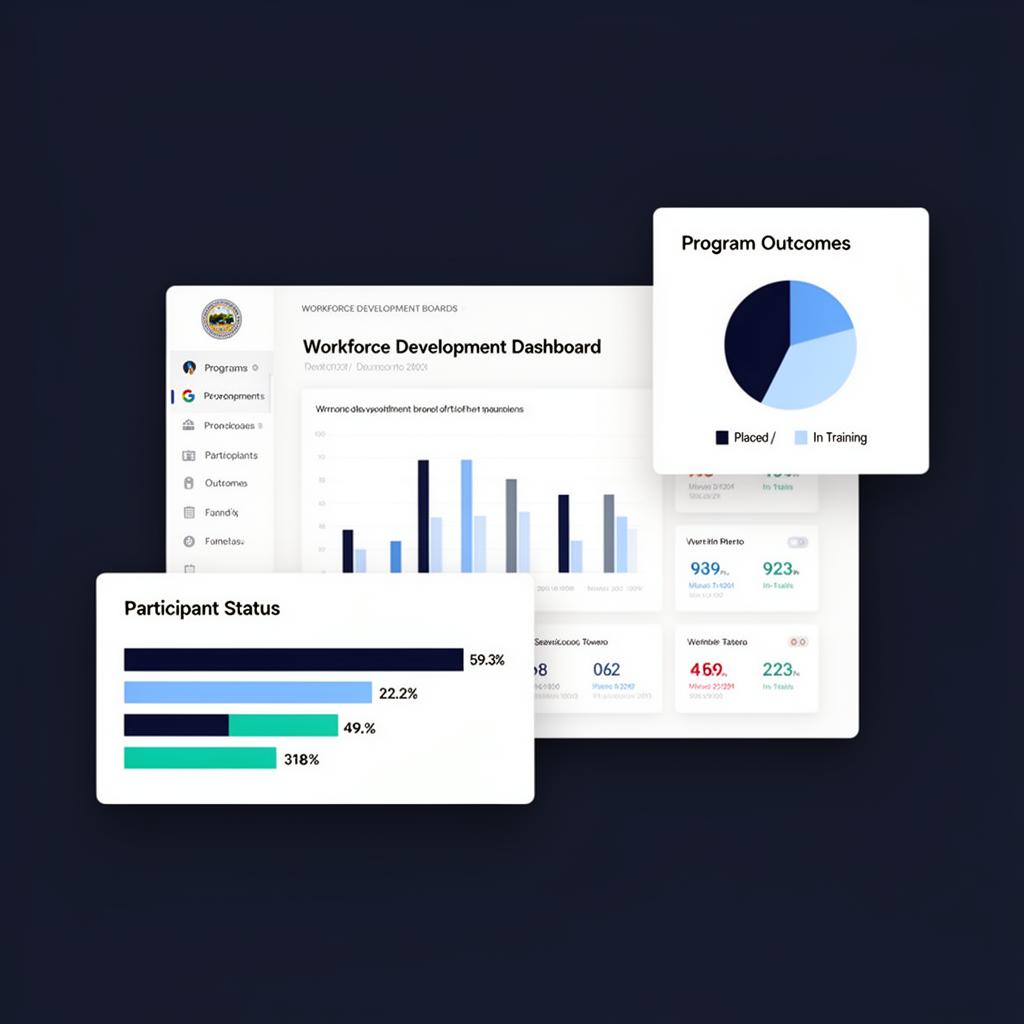
See where participants are in their readiness journey — across sites, cohorts, and partners — without another dashboard to maintain.
Earlier identification of participant needs
Disengagement, stalled progress, and readiness gaps become visible early enough to actually do something about them.
Coordinated communication and follow-through
Steady, organized communication tied to the participant's plan — not scattered across personal channels.
Scalable participant support
Structured support that grows with the program — without growing the case manager team at the same rate.
Better employment readiness outcomes
More participants prepared, more confident, and more ready when training and employment opportunities open up.
Not just another workforce database or reporting tool.
Traditional systems store participant records, track services, manage compliance, and generate reports. CDP works alongside those systems to guide employability development, support workplace readiness, coordinate communication, improve follow-through, and connect participant development to real workforce outcomes — between meetings, not just during them.
Traditional systems
- Static participant records
- Reporting-heavy workflows
- Reactive support
- Fragmented communication
- Limited visibility into readiness
- Case-manager-dependent guidance
CDP
- Structured participant development
- Guided employability support
- Shared visibility and communication
- Earlier support opportunities
- Continuous participant growth support
- Connected readiness and outcome visibility
Complementary to the workforce, case management, and reporting systems you already use — not a replacement.
Structured support that helps participants keep moving forward.
Participants get guided employability development, workplace readiness support, structured next steps, steady communication, milestone visibility, and confidence-building activities they can act on independently or with coach and partner support.
Communication
Clear, professional communication for interviews, supervisors, teammates, and everyday workplace situations.
Professionalism
How to show up, how to engage, and how to navigate workplace expectations with confidence.
Workplace expectations
Real-world preparation for the kinds of environments participants are actually entering.
Accountability
Follow-through that becomes a habit — supported by clear next steps and steady check-ins.
Organization
Planning, prioritization, and follow-through skills that carry across roles and life situations.
Confidence
Confidence built on structured preparation and visible progress — not pressure in the moment.
Routines
Daily structure and habits that make workforce readiness sustainable, not situational.
Employability and career readiness
Practical readiness for the work environments participants are heading into — and the ones they're building toward next.
How the work actually changes.
Same mission, same participants, same partners — with more structure, more visibility, and far less time spent holding the work together with manual follow-up and end-of-week documentation.
Case Manager / Career Coach
- Overwhelming caseloads with limited time per participant
- Manual follow-up across phone, email, and notes
- Difficult visibility into where each participant actually is
- Fragmented communication across partners and providers
- Documentation that eats into participant-facing time
- Better visibility into each participant's progress
- Easier follow-through across the caseload
- Earlier readiness identification
- Coordinated communication tied to the participant's plan
- More time focused on participant success
Participant
- Unsure what to work on between meetings
- Inconsistent support depending on the week
- Difficulty staying engaged across programs and partners
- Limited guidance between case manager touchpoints
- Clear, structured next steps
- Guided development they can act on independently or with support
- Better workplace readiness over time
- Increased confidence going into training and employment
- More consistent follow-through on goals
Workforce Leadership
- Limited operational visibility across sites and partners
- Reporting cycles that pull staff away from participants
- Difficulty identifying program gaps in time to act
- Inconsistent participant outcomes across the region
- Better workforce readiness visibility across the system
- Easier operational coordination across teams and partners
- Stronger participant outcome visibility
- More scalable workforce support without expanding headcount
Workforce Partner / Provider
- Disconnected communication across organizations
- Limited visibility into participant progress
- Difficult coordination on shared participants
- Hand-offs that depend on email threads and phone tag
- Shared visibility into participant progress
- Easier collaboration across partners
- Better participant coordination across handoffs
- Stronger workforce alignment across the system
Identify support needs before participants fall behind.
CDP surfaces the engagement, readiness, and support signals that matter — so staff can step in earlier, with the right kind of support, instead of finding out after a participant has already disengaged or a placement is struggling.
- Drop-off in participation
- Long gaps between check-ins
- Disengagement from training or placement steps
- Low follow-through on agreed next steps
- Stalled progression on milestones
- Communication challenges surfacing in interactions
- Workplace habit or routine gaps
- Inconsistent follow-through over time
- Quiet participants going under the radar
- Participants juggling more than they can manage
- Signs of instability surfacing in updates
- People at risk of falling behind
Support, not surveillance
This isn't about monitoring participants. It's about giving staff enough visibility to step in earlier with real readiness support — so more participants build the employability and confidence they need to succeed.
Real capabilities for how workforce programs actually work.
Designed around how case managers, career coaches, participants, partners, and leadership actually work day to day — across employability, workforce readiness, and ongoing participant support.
Participant development roadmaps
Guided employability paths across communication, professionalism, routines, and workplace readiness.
Why it matters: Participants always know what to work on next — and staff see where each person is in the journey.
Workforce readiness tracking
Structured progression across the real-world readiness skills participants need on the job.
Why it matters: Readiness becomes visible and measurable, instead of something you only assess after a placement struggles.
Communication workflows
Organized communication tied to the participant's plan — not scattered across personal channels.
Why it matters: Participants and support circles stay aligned between meetings, not just during them.
Progress and milestone tracking
Clear milestones that show where each participant has been and where they're going next.
Why it matters: Progress becomes visible and motivating for staff, partners, and participants alike.
Case manager visibility
A shared view of how each participant is progressing across the caseload.
Why it matters: Staff focus their limited time on the participants and moments that matter most.
Follow-through tracking
See what was started, what's in motion, and what's been completed.
Why it matters: Plans stay visible until they're done — not lost between appointments.
Documentation and notes
Case notes, updates, and milestones captured in the flow of the work.
Why it matters: Less end-of-week paperwork. More accurate, useful documentation.
Role-based visibility
Case managers, participants, partners, and leadership each see what's relevant to their role.
Why it matters: No clutter, no noise — just the picture each person needs to support the participant well.
Reporting and compliance support
Reporting tied to real participant activity, ready when funders, auditors, or state and federal partners ask.
Why it matters: Less manual reporting work — and fewer fire drills before deadlines.
Workforce partner coordination
Shared workflows and visibility across the providers and partners supporting the same participants.
Why it matters: Programs operate together — not just side by side.
Risk alerts and readiness visibility
Earlier signals when engagement, progress, or readiness change.
Why it matters: Teams can step in before small issues become placement or retention setbacks.
Employability and career readiness tracking
Structured progression across employability, career readiness, and the workplace skills that matter long term.
Why it matters: Participant growth is captured as part of the daily work — not as a separate assessment cycle.
Support more participants without expanding staff burden.
CDP takes the structural side of participant development off the staff's plate — so the time they do have can go to the moments and participants that need it most.
Without CDP
- Overwhelming caseloads
- Reactive support when issues surface late
- Fragmented communication across partners and channels
- Manual follow-up and coordination
- Inconsistent participant readiness
- Documentation overload pulling time from people
With CDP
- Structured participant development
- Coordinated communication across the support circle
- Clearer visibility across the caseload
- Easier follow-through on plans and next steps
- Earlier readiness identification
- More scalable workforce support without expanding headcount
Reporting and documentation built into the daily workflow.
Participant progress, communication history, support notes, milestones, and outcomes flow out of the work itself — so program, WIOA, grant, and funder reporting is ready when you need it, not built from scratch every cycle.
- Participant progress tracking tied to real work
- Complete communication and service history
- Documentation captured as work happens
- Milestone visibility across the caseload
- Workforce outcome reporting built from real participant activity
- WIOA and grant reporting support
- Audit readiness as a byproduct of the daily workflow
- Less manual reporting work for already-stretched staff
Less administrative burden — not another compliance system to maintain.
What workforce organizations can expect.
Not another database. Not another dashboard. A coordinated employability development and participant support system that helps workforce organizations support more people, with less fragmentation and less staff burden.
- Stronger employability outcomes
- Improved workplace readiness across participants
- Earlier participant support when it matters most
- Reduced staff burden across the caseload
- Stronger communication and coordination across partners
- Improved participant confidence going into training and placement
- Clearer readiness visibility for staff and leadership
- Better follow-through on plans and next steps
- More scalable workforce support across the region
- Stronger employment outcomes for more participants
see our software in action
See how CDP helps workforce organizations support more participants, reduce staff burden, improve workplace readiness, and strengthen employment outcomes through one connected system.